The Rise of Security Token Exchanges
Many countries are looking to dematerialize their financial markets, switching from physical to digital securities tracking using blockchain technology. For issuers, digital securities make global issuance cheaper and mo...
Archive context
Older archive item. Useful for background and entity history, but not a fresh market-moving signal.

Many countries are looking to dematerialize their financial markets, switching from physical to digital securities tracking using blockchain technology. For issuers, digital securities make global issuance cheaper and more efficient, while streaming business operations with smart contracts. On the investor’s side, digital securities grant access to a larger pool of investment opportunities while reducing settlement fees and times
The Race to Become a Security Token ExchangeIntercontinental Exchange (ICE), the owner of the New York Stock Exchange (NYSE), revealed digital currency exchange Bakkt in 2019 – “Bakkt” being a play on words for “backed”, or “asset-backed securities”. Bakkt’s focus is warming Wall Street to the idea of virtual currency trading and acting as a scalable crypto on-ramp. However, its development is still ongoing and is slated for completion in 2023.
In Australia, the Australian Securities Exchange (ASX) teamed up with leaders in the cryptocurrency space to move its current exchange platform onto distributed ledger technology. Today, it offers distributed ledger technology as a service to clients, who enjoy the benefits of better data accessibility and smart contract-assisted optimized workflows.
Asia and Canada, too, see traditional exchanges exploring the digital asset space. The Hong Kong Exchange and Clearing Limited (HKEX) recently launched Synapse, distributed ledger technology-assisted service that facilitates the movement and ownership management of securities post-purchase. Meanwhile, the Canadian Securities Exchange (CSE) launched a settlement platform and promotes the use of Security Token Offerings (STOs), which many companies have used as semi-regulated and accelerated paths to market.
On the cryptocurrency side, major exchanges have also noticed the latent potential of digital securities. With blockchain technology already in place, they are competitively positioned to corner the market. While operating in the largely unregulated cryptocurrency space, they have been slowly accumulating the licenses needed to exchange traditional securities on-chain.
Cryptocurrency giant Binance caught the attention of global regulatory agencies in mid-2021 when it began offering a product it called “stock tokens”, tokens whose values were pegged to publicly traded stocks. After being threatened with severe legal action for dealing in securities without being appropriately licensed to do so, Binance ceased their sale. Binance CEO Changpeng “CZ” Zhao then announced Binane’s plans to become a fully regulated financial institution.
As described by Quinlan & Associates, Huobi and Coinbase, having already secured broker-dealer licenses regulated by the SEC and FINRA, are on their way to offering security tokens as well, cementing the inevitability of security tokens as a major market force.
Security Token Exchanges LandscapeHowever, both traditional and cryptocurrency exchanges face major challenges in their transitions. Traditional exchanges are held back by legacy technology and paper-based securities. Cryptocurrency exchanges may experience difficulty in changing their brand perception from cryptocurrency specialists to digital asset generalists.
In response, new digital asset broker-dealers, sometimes called blockchain exchanges, have been entering the space. Some examples of which are Archax, the first security token exchange to be regulated by the Financial Conduct Authority in London; tZERO, an SEC-regulated alternative trading system offering digital asset trading; and INX, a trading platform for regulated security tokens and cryptocurrencies.
Still, blockchain exchanges face problems of their own. Most are established by cryptocurrency enthusiasts unfamiliar with licensing, and as such are lacking in licensing when compared to traditional exchanges. This leaves a void, or industry white space, for financial organizations with both high digital capabilities and full licensing.
Positioned to fill that white space, Fusang, founded in Malaysia in 2015, is Asia’s first fully-licensed digital securities exchange. Fusang offers a platform for global investors to invest in digital securities through on-chain digitization of real-world assets including shares, bonds, and funds. The platform includes various products intended for the easy management of digital assets.
Fusang’s exchange excels where traditional asset exchanges fall short – technology, fulfillment, product access, and market access. Fusang Vault is a secure and fully-licensed custodial service provider that protects clients’ assets from external threats. Lastly, Fusang Digital Identity is a digital user ID that can be leveraged in a modularized and scalable manner. Fusang provides a one-stop client onboarding service, which includes KYC, AML, and a risk-based assessment to speedily onboard retail and corporate clients with minimal friction.
Why this matters
This security story adds another data point to the current market tape and is useful when read alongside nearby source coverage.
Original source
Read on NewsBTCRelated market context
Bitcoin Hits $70,000 as Trump Pushes CLARITY Act, Hyperliquid Surges and $1.4 Billion in Shorts Get Wiped Out
By late trading, Bitcoin was changing hands around $69,200, up approximately 7% over 24 hours after starting the session near $64,...
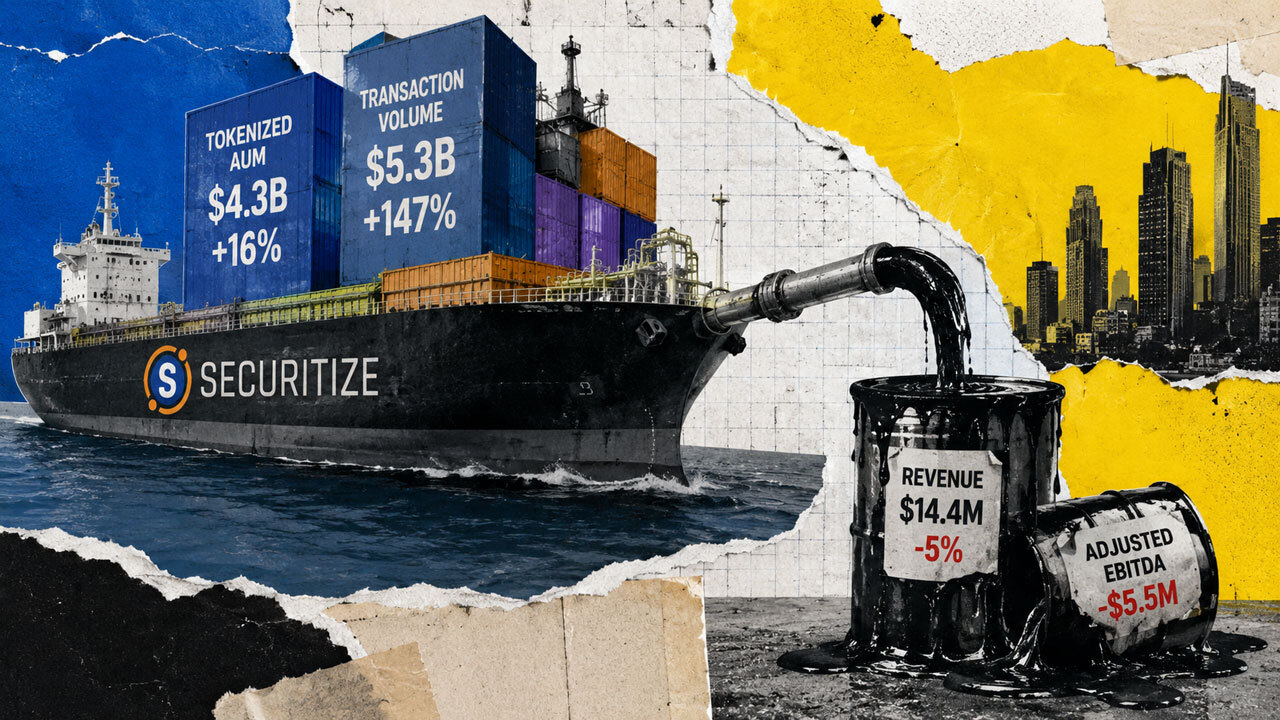
Can tokenized assets continue to scale faster than the revenue models behind them?
Securitize closed its first quarter as a public company with average tokenized assets under management hitting a record $4.3 billi...

Bitunix Named Best Chart Trading Platform at Peru Blockchain Conference 2026
The world’s fastest-growing cryptocurrency exchange, Bitunix, has been named Best Chart Trading Platform at the Peru Blockchain Co...

Bitwise CIO Matt Hougan pitches tokenized asset future at White House crypto gathering
Tokenizing traditional assets could significantly expand blockchain's role in finance, potentially reshaping global markets and re...

SEC Unveils $75M Crypto Fundraising Rules With New Token Safe Harbor Proposal
Key Takeaways: The SEC has proposed Regulation Crypto Assets in a framework for certain crypto investment contracts. Up to $5m or...

Solana leads in tokenized stock deposits on DeFi platforms: report
Solana's DeFi prominence may boost its ecosystem, but varied market expectations suggest uncertainty in its near-term price trajec...