Polymarket Expands Chainlink-Powered 15-Minute Markets to Gold and Silver
TL;DR: Polymarket and Chainlink announced an expansion of their oracle partnership on October 29, bringing high-speed up/down prediction markets to gold and silver and extending the concept beyond crypto assets. The anno...
Watchlist
Published in the last two hours. Multiple named entities are involved.
TL;DR: Polymarket and Chainlink announced an expansion of their oracle partnership on October 29, bringing high-speed up/down prediction markets to gold and silver and extending the concept beyond crypto assets. The announcement says Chainlink has supported more than $11 billion in trading volume on the platform, but that figure is not a forecast of what the new contracts will attract.
Prediction markets need more than a collection of traders. They also need an agreed answer to the question being traded: what happened to the underlying price by the end of the contract? The shorter the contract, the more carefully that answer needs to be defined.
That is the backdrop to a Chainlink announcement on October 29. It says Polymarket is deepening its use of Chainlink as an official oracle for rapid up/down markets, including new exposure to gold and silver. The companies describe an expansion of 15-minute formats into commodities, equities and foreign-exchange markets.
Why the settlement data mattersAn up/down contract asks whether a reference price ends above or below a specified level at a particular time. That sounds straightforward, but two market-data sources can disagree briefly, especially when instruments trade around the clock or a contract ends during a volatile period.
The oracle determines which information enters the settlement process. For a high-frequency market, the timing convention, reference venue, publication frequency and dispute-handling rules can be as important as the price direction itself.
Chainlink says its infrastructure has already supported more than $11 billion in Polymarket trading volume. That is presented as activity processed through the partnership to date, not the size of the new gold and silver market or evidence of profit generated by participants.
For traders, a well-designed oracle should reduce ambiguity about the outcome. It cannot remove all market risk, guarantee execution at a desired price or ensure every contract is suitable for every jurisdiction. Prediction market access and the legality of particular contracts also vary across regions.
Gold and silver change the reference marketMoving from cryptocurrency prices to precious metals introduces differences in trading hours, underlying reference instruments and price discovery. Spot metals, futures and other benchmarks can move together without matching tick for tick. A contract’s methodology must therefore explain which index or feed is authoritative.
The same challenge becomes more complicated with foreign exchange and equities. Equities may not trade continuously in the same way as crypto, while different FX reference points could apply across market sessions. Speed alone is not a substitute for clearly documented market rules.
The announcement is also notable because it shows crypto infrastructure being repurposed for financial questions outside the digital-asset market. NewsBTC has covered planned infrastructure for tokenized securities, a separate example of blockchain providers competing on market infrastructure rather than token speculation alone.
What adoption would look likeThe next useful figures would be contract-level trading volume, order-book depth, dispute frequency and the ability of markets to settle accurately during difficult price moves. These operational measures are more informative than the existence of a new trading pair.
There are also consumer-protection questions. Fifteen-minute contracts can encourage frequent decisions, and transaction costs or spreads can materially affect outcomes. They should not be presented as straightforward substitutes for holding gold, silver or an exchange-traded investment.
Polymarket and Chainlink have announced an extension of their data partnership into new underlying markets. The significance will depend on whether the contracts attract sustained use and whether the oracle and settlement rules perform reliably when prices move quickly.
This article was written by the News Desk and edited by Samuel Rae.
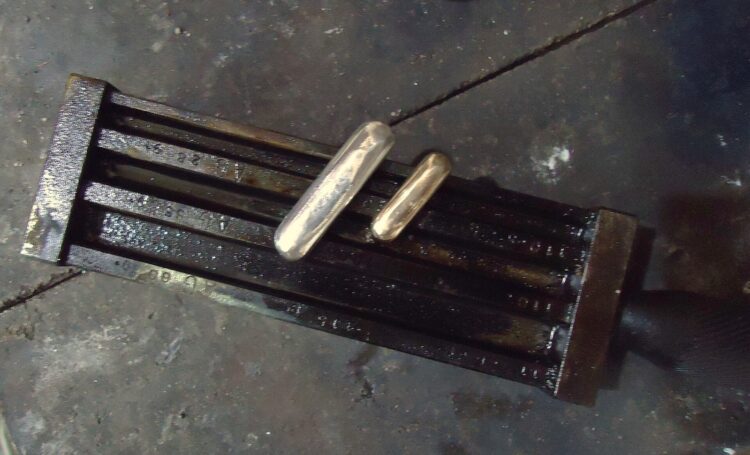
Featured image: Cast silver and gold ingots. Photo: Mauro Cateb via Wikimedia Commons, licensed under CC BY-SA 3.0.

Why this matters
Chainlink is showing up inside the Market Structure theme, so this story is worth tracking for follow-through rather than treating it as a one-off headline.
Original source
Read on NewsBTCRelated market context

SEC Publishes New Kalshi Security-Futures Filing as Perpetual Contracts Advance
TL;DR: The SEC published a November 6 notice on a KalshiEX rule change concerning listing standards for perpetual security-futures...
Riot Sells More Than 20,000 Bitcoin as AI Data-Centre Contracts Reach $38B
TL;DR: Riot Platforms says it sold 20,264 BTC in the first nine months of 2026, raising about $1.5 billion primarily for data-cent...

CFTC Says US-Regulated Exchanges Can Begin Trading Individual-Stock Perpetual Futures
TL;DR: CFTC chairman Michael Selig said on November 3 that individual-equity perpetual futures can begin trading on appropriately...

Charles Schwab brings Solana, Avalanche and Chainlink to retail investors
Schwab's expansion into diverse crypto assets may enhance retail investor engagement and portfolio diversification, impacting trad...

Tornado Cash-Linked Wallet Sells ETH to Buy Zcash on Hyperliquid
Key Takeaways: In a 20-hour period, a wallet transferred 1,670 ETH valued at around $3.73 million from Tornado Cash to Hyperliquid...

Ethereum (ETH) Price Prediction: Whale Accumulation Builds as $2,350 Reclaim Could Restart the Recovery
Ethereum is starting November at an important point in its recovery. According to Brave New Coin, ETH is trading near $2,230, with...