Bearish Indicator: Are Big Players No Longer Interested In Bitcoin?
Bitcoin prices are trending higher, but big players appear hesitant to buy into the current rally. Bitcoin Reserves Dropping On-chain data shows that exchange, digital asset banks, and miner BTC reserves are relatively l...
Archive context
Older archive item. Useful for background and entity history, but not a fresh market-moving signal.

Bitcoin prices are trending higher, but big players appear hesitant to buy into the current rally.
Bitcoin Reserves DroppingOn-chain data shows that exchange, digital asset banks, and miner BTC reserves are relatively lower. Over the past weeks, the spot price of BTC has soared over 40%, bottoming at around $15,300 registered in Q4 2022. Bitcoin has now risen to retest $23,300, reaching a new Q1 2023 high.
As history shows, the spike in Bitcoin prices should be at the back of solid support, mainly from heavyweights, including miners and digital asset banks.
Bitcoin miners tend to have big reserves of BTC at any point in time since they need to liquidate from time to time, meeting operation costs. In recent months, following the drop in Bitcoin prices coupled with a high hash rate potentially making mining success harder, their reserves have declined.
Looking at Bitcoin Miners’ and Digital Asset Banks’ ReservesAccording to streams, BTC reserves fell from 1.847 million on January 12 to 1.836 million on January 2023. During this time, the price of Bitcoin has been on a bullish run, questioning whether the pump is on an empty tank.
It should be noted that miners tend to offload their coins when unsure of the price trajectory in weeks and months ahead.
Their selling deluge punctures the upside momentum and might even push the coin lower. However, when miners are confident about what lies ahead, they accumulate, expecting the shift in trend to result in tidy profits on their end. Therefore, the current divergence between miner reserves and prices could be a bearish signal.
Besides miners, digital asset bank reserves are declining. Digital asset bank reserves refer to BTC held by these regulated institutions. Over the past few months, following the collapse of FTX, Alameda Research, and the effects it had on other players, including DCG and Genesis Global, their activity has been near non-existent.
The contraction means institutions are playing safe and may not be willing to accumulate and store their coins in these ramps. During the last bull cycle, from 2020 to 2021, there was noticeable activity amongst digital asset banks, pointing to possible interest from institutions.
Although traders and optimists might interpret the recent bounce in crypto prices as a net positive for BTC, the absence of leads, judging from institutional activity, may question whether the current rally would last longer.
There might be a regulatory angle affecting digital asset banks’ involvement. Government agencies are asking whether crypto venture capitals and service providers did adequate due diligence before exposure to crypto in the last bull cycle.
At the same time, some digital asset banks are reducing their crypto exposure, affecting activity.
Why this matters
This bitcoin story adds another data point to the current market tape and is useful when read alongside nearby source coverage.
Original source
Read on NewsBTCRelated market context
Chainlink And LG CNS Target South Korean Banks With Digital Asset Infrastructure Deal
TL;DR: Chainlink and LG CNS are partnering on oracle and cross-chain infrastructure aimed at South Korea’s financial institutions;...
Dune Adds Real-Time Spot And Perpetual Trade Feeds Across On-Chain Markets
TL;DR: Dune has launched normalized real-time feeds for spot and perpetual DEX trades, designed to help institutional desks compar...

Crypto Whale Activity: $7.2M Flows Into 9 Altcoins as PUMP and ENA Face Selling Pressure
Crypto whale activity is sending unusual signals across the altcoin market. One whale deployed $7.22 million across nine coins, in...
SEC Examiners Set Sights on Tokenization at Clearing Agencies for Fiscal 2027
The SEC’s Division of Examinations has named tokenization among the “high-risk areas” its staff will focus on when examining clear...

Tokenized assets pull in more than $1 billion in fresh capital in 30 days
The surge in tokenized asset investments highlights growing interest in digital finance, but reliance on key players and measureme...
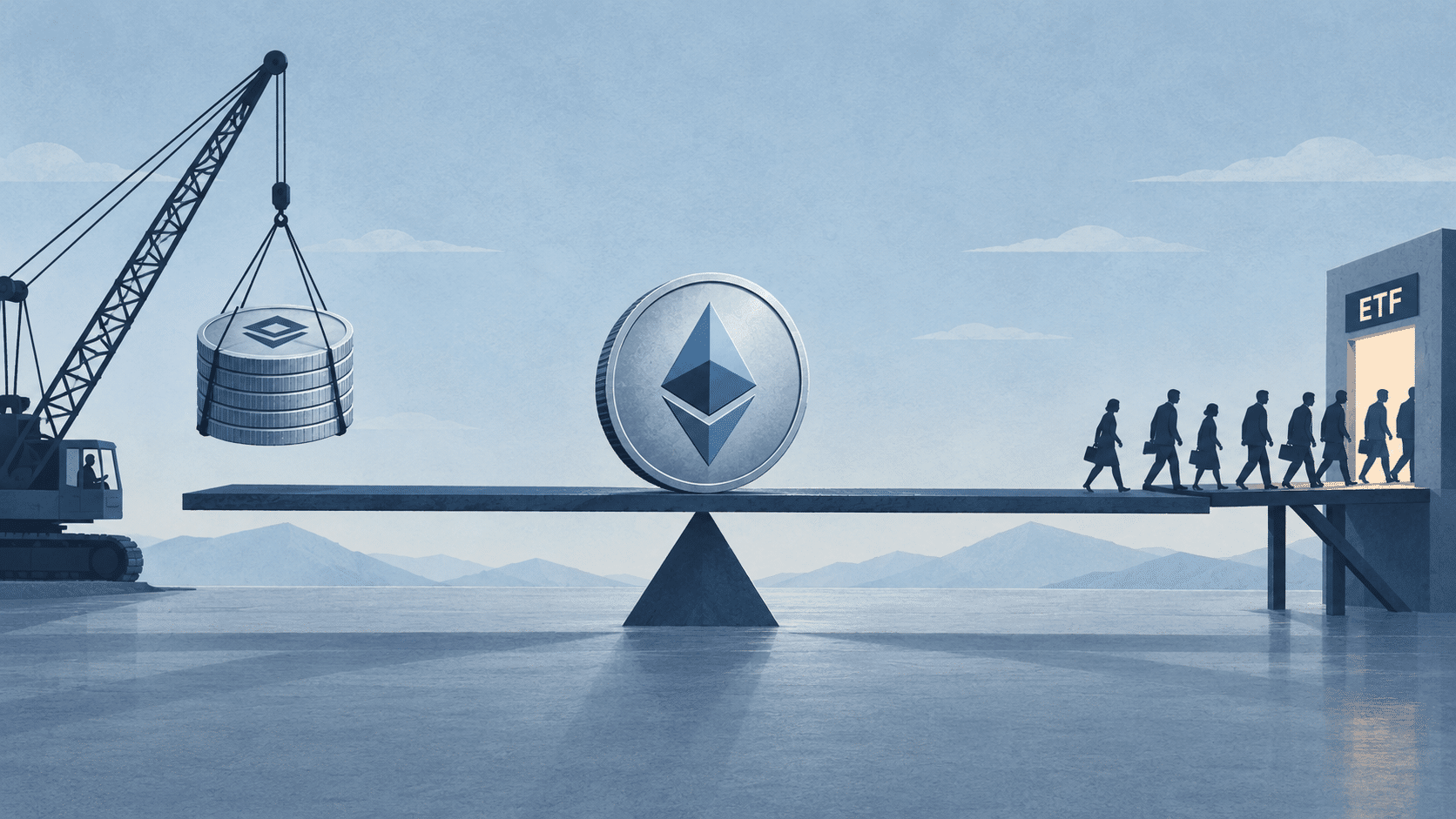
Ether ETFs Are Having Their Worst Month of 2026. Who Buys Once Bitmine Stops?
Ether’s (ETH) demand this year has largely come from two places: spot exchange-traded funds (ETFs) and Bitmine Immersion Technolog...