Bitcoin Faces A Black Swan — Bitwise Sounds The Alarm
Last Friday’s US July Employment Situation release has delivered the kind of statistical jolt that rarely shows up outside crises, forcing traders to re-evaluate both the macro outlook and Bitcoin’s near-term path. Payro...
Archive context
Older archive item. Useful for background and entity history, but not a fresh market-moving signal.

Last Friday’s US July Employment Situation release has delivered the kind of statistical jolt that rarely shows up outside crises, forcing traders to re-evaluate both the macro outlook and Bitcoin’s near-term path. Payrolls grew by just 73,000, but the shock lay in the record-large negative revisions: May and June were marked down by a combined 258,000 jobs, slicing the three-month hiring average to 35,000 and erasing nearly all of the second-quarter’s reported momentum. The Bureau of Labor Statistics notes that revisions of that magnitude have been seen only during the Covid collapse.
Is Bitcoin Really Facing A Black Swan Event?Bloomberg Economics chief US economist Anna Wong wrote: “The downward revisions to May and June payrolls in the July jobs report constitute a black swan event – a three-standard-deviation move with less than a 0.2% chance of occurrence in the last 30 years. Adjusted for our estimate of the job overstatement from the Bureau of Labor Statistics’ birth-death model, the three-month hiring pace turns outright negative.” The data, she wrote in a terminal note circulated Friday, “flipped the labor-market script” from re-acceleration to abrupt cooling.
Related Reading: Bitcoin Could See Another Crash To Fill This Imbalance Before Rally To $120,000
The market’s crypto voice on the issue has been Bitwise Europe’s head of research, André Dragosch, who spent the morning posting a string of warnings on X. First came the news, ”According to Bloomberg chief economist Anna Wong, the most recent payroll revisions were a ‘black swan event’.Will probably get even worse before it gets better…”, then the maxim, “Yes – bad for payrolls = good for bitcoin, at least over the medium to long term.”
Minutes later he argued that deeper revisions could force emergency easing: “NOTE: There is a strong case for a negative June jobs print after further downside revisions which could lead to a 50 bps rate cut in September… Plan accordingly. #Bitcoin”
By mid-afternoon he pushed the point to its logical extreme: “ATTENTION: We are probably just a single negative NFP print away from a significant repricing in Fed rate cut expectations. US labor market & inflation data surprises are still as bad as during Covid but traders only price in 2 cuts until Dec 2025… Printer is coming… ”
Interest-rate futures moved sharply in Dragosch’s direction. On Wednesdays, the CME FedWatch Tool showed a 91 percent probability of at least one cut at the 17–18 September FOMC meeting. Minneapolis Fed President Neel Kashkari acknowledged that “the real underlying economy is slowing,” while Governor Lisa Cook called the size of the revisions “concerning.”
Bitcoin’s price action captured the tug-of-war between recession fear and liquidity hope. The flagship cryptocurrency slumped to $111,920 on 2 August, its lowest print since early July, immediately after the payroll release and President Donald Trump’s subsequent firing of BLS Commissioner Erika McEntarfer. A tentative rebound toward $111,500 followed as rate-cut odds ballooned this week. Yet, Bitcoin remained tethered to macro headlines rather than its own cycle.
Still, the first clear sign of positioning for easier policy has emerged in fund flows. Spot Bitcoin ETFs recorded a net $91.6 million inflow on 7 August, snapping a four-day outflow streak that had drained more than $380 million from the vehicles.
Whether Bloomberg’s and Dragosch’s black-swan framing proves prescient will depend on the next few data prints and the Fed’s tolerance for risk. For now the market is caught between those poles: one bad jobs number away from a full-blown policy response, but one more shock away from a broader risk-off spiral. The only certainty, as Wong’s probability math and Dragosch’s full-throated alerts both imply, is that the margin for error has evaporated.
At press time, BTC traded at $116,359.
Why this matters
This bitcoin story adds another data point to the current market tape and is useful when read alongside nearby source coverage.
Original source
Read on NewsBTCRelated market context

Fed Rate Cut Delayed as Strong Jobs Data Tests Bitcoin
Citigroup pushed its forecast for the Fed first interest rate cut to June 2027 after US employers added 162,000 jobs in August, mo...
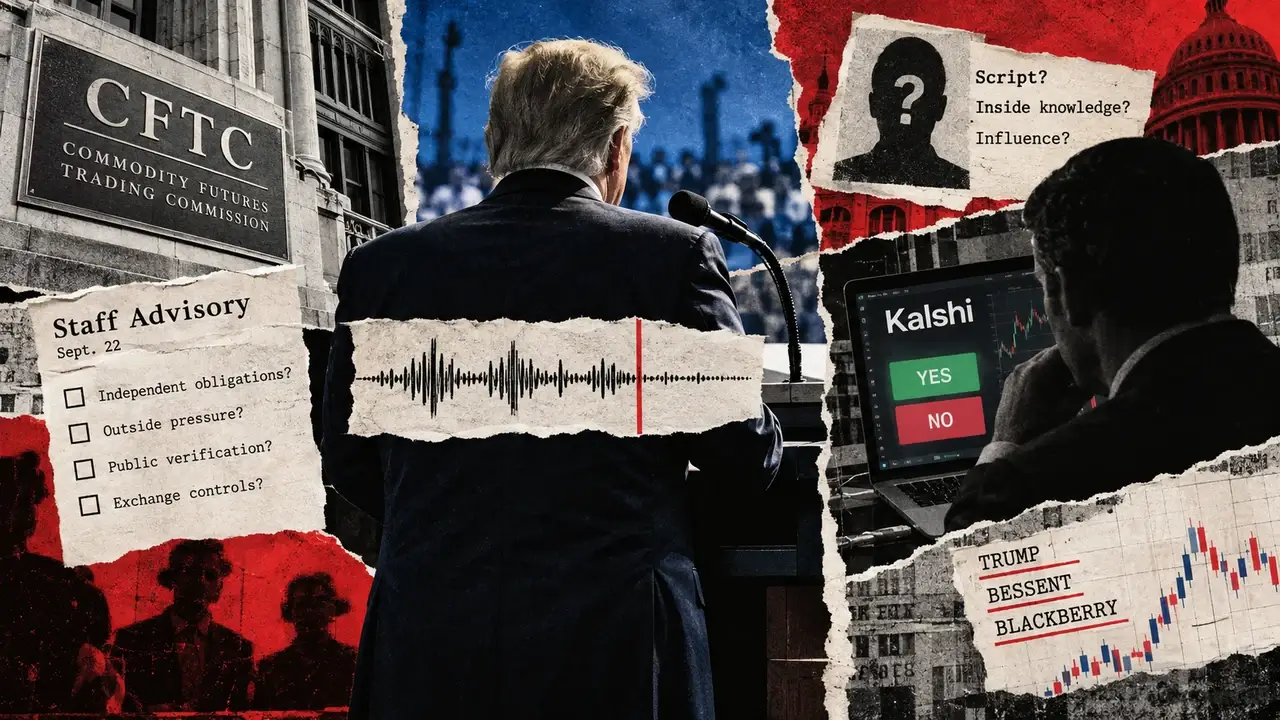
CFTC staff presses exchanges on political speech prediction market bets, asks how to prevent manipulation
A clear video can settle whether a public figure said a particular word. It cannot show who knew the script beforehand or whether...

Ondo, Securitize and BlackRock pitch OUSG for Sky’s $1 billion tokenization initiative
The collaboration could significantly enhance liquidity and diversification in tokenized assets, potentially reshaping financial e...

Bitcoin Losing AI Payments Battle per Blackrock, but Not the War
A new report from Blackrock and new findings by the Bitcoin Policy Institute show that bitcoin is losing the agentic payment battl...

Trump’s Accounts Put as Much as $100,000 Into Strategy Stock in July, Disclosure Shows
President Donald Trump’s investment accounts put between $50,001 and $100,000 into Strategy stock on July 27, one of several crypt...

BlackRock broadens AI investments beyond early tech leaders
BlackRock's AI investment shift may drive significant capital into non-tech sectors, influencing market dynamics and investment st...