Bitcoin News: A Weak Jobs Report Just Slashed Fed Rate Hike Odds in Half, And Bitcoin Bounced Off $57,750 to Reclaim $61,000
Bitcoin price clawed back the $62,000 level after June non-farm payrolls printed at 57,000, less than half the 113,000 consensus، sending the implied probability of a September Fed rate hike from 64% to 54% on the CME Fe...
Archive context
Older archive item. Useful for background and entity history, but not a fresh market-moving signal.

Bitcoin price clawed back the $62,000 level after June non-farm payrolls printed at 57,000, less than half the 113,000 consensus، sending the implied probability of a September Fed rate hike from 64% to 54% on the CME FedWatch Tool news and dragging AI stocks sharply lower.
The question that data forces onto the table is whether this macro shift marks a durable floor or simply a relief bounce inside a structure that has already given up 20% in a single month.
The US Labor Department compounded the miss by revising April and May figures downward by a combined 74,000 jobs, signaling that prior strength in the labor market was overstated.
JUST IN: U.S. June Economic Data:
Initial Jobless Claims: 215k vs 220k est
Non Farm Payrolls: 57k vs 110k est
Unemployment Rate: 4.2% vs 4.3%
BTC had bottomed at $57,750 on Wednesday before the report; the jobs data gave the asset the catalyst it needed to distance itself from that low, recovering above $60,000 alongside a broader move into scarce-asset proxies.
Discover: The Best Token Presales
Bitcoin News: What a Labor Miss Actually Means for BTCWeak labor data reduces inflationary pressure and, by extension, the Fed’s justification for holding rates elevated. That transmission mechanism is direct: lower rate-hike odds compress the opportunity cost of holding non-yielding assets like Bitcoin and gold, while simultaneously raising expectations for eventual balance sheet expansion.
The Fed’s balance sheet currently sits stagnant at $6.73 trillion, though its mandate permits $40 billion in monthly short-term Treasury purchases, a lever that remains undeployed and increasingly relevant if labor data continues to soften.
Gold reinforced that read Thursday, recovering a portion of the 8% losses it accumulated over the prior two weeks. Central bank liquidity conditions remain the primary macro driver for both assets, and gold’s bounce adds credibility to the narrative that markets are pricing a less restrictive Fed rather than a one-day tactical trade.
Source: Gold Price / TradingviewWTI crude stabilized below $70 after Qatar’s Foreign Ministry cited positive progress in US–Iran negotiations, reducing the inflationary risk premium on oil and leaving additional room for stimulus discussions.
The Nasdaq 100 told a different story. The index erased three consecutive days of gains on Thursday as chipmakers and AI-adjacent hardware names took the heaviest damage.
SanDisk, Seagate, Western Digital, and Applied Materials each fell 9% or more intraday. That kind of synchronized selloff in the AI hardware complex is not simply profit-taking; it signals that the valuation premium embedded in the sector’s growth assumptions is being questioned, and some of that capital will seek a landing spot.
Discover: The Best Crypto to Diversify Your Portfolio
On-Chain: Seller Exhaustion at Levels Not Seen Since 2022The macro catalyst and news matter less for Bitcoin if the underlying on-chain structure is still deteriorating. It is not. CryptoQuant analyst gaah_im reported that Bitcoin’s realized profit-to-loss ratio has hit its lowest level since 2022, with the net percentage of supply in profit relative to total supply turning negative.
Historically, that combination has marked cycle bottom inflection points with what the analyst described as “extreme precision.”
What the on-chain data confirms is that seller exhaustion is real at current prices, holders who were going to capitulate largely have.
Source: CryptoQuantWhat it does not confirm is timing: a metric flagging a cycle low tells you the floor is close, not that the next weekly candle resolves higher. Bitcoin was also rejected at $82,500 two months prior, and that supply zone has not been neutralised.
The realized profit-to-loss signal is most useful as a risk-management input rather than a directional trigger. It narrows the probability distribution of downside outcomes without eliminating them.
Analysts flagging a potential sub-$60,000 retest as a “healthy validation” of the bottom are not wrong, that scenario remains live if upcoming CPI data or FOMC communications re-accelerate hawkish pricing. The downside case for Bitcoin does not disappear because one labor print came in soft.
Don’t Miss Out on Our $1,000 USDT Airdrop on ByBit
The post Bitcoin News: A Weak Jobs Report Just Slashed Fed Rate Hike Odds in Half, And Bitcoin Bounced Off $57,750 to Reclaim $61,000 appeared first on Cryptonews.
Why this matters
Bitcoin is showing up inside the Institutional Adoption theme, so this story is worth tracking for follow-through rather than treating it as a one-off headline.
Original source
Read on CryptonewsRelated market context
Tether Freezes $1.45M in THORChain USDT Vaults, Then Reverses Blacklist Hours Later
Key Takeaways: The amount of about $1.45 million in USDT was temporarily frozen in THORChain vault addresses. According to THORCha...

Ledger theft-linked funds shift from USDT to USDD to dodge Tether freezes
The shift from USDT to USDD underscores vulnerabilities in stablecoin freeze mechanisms, prompting scrutiny on regulatory and secu...
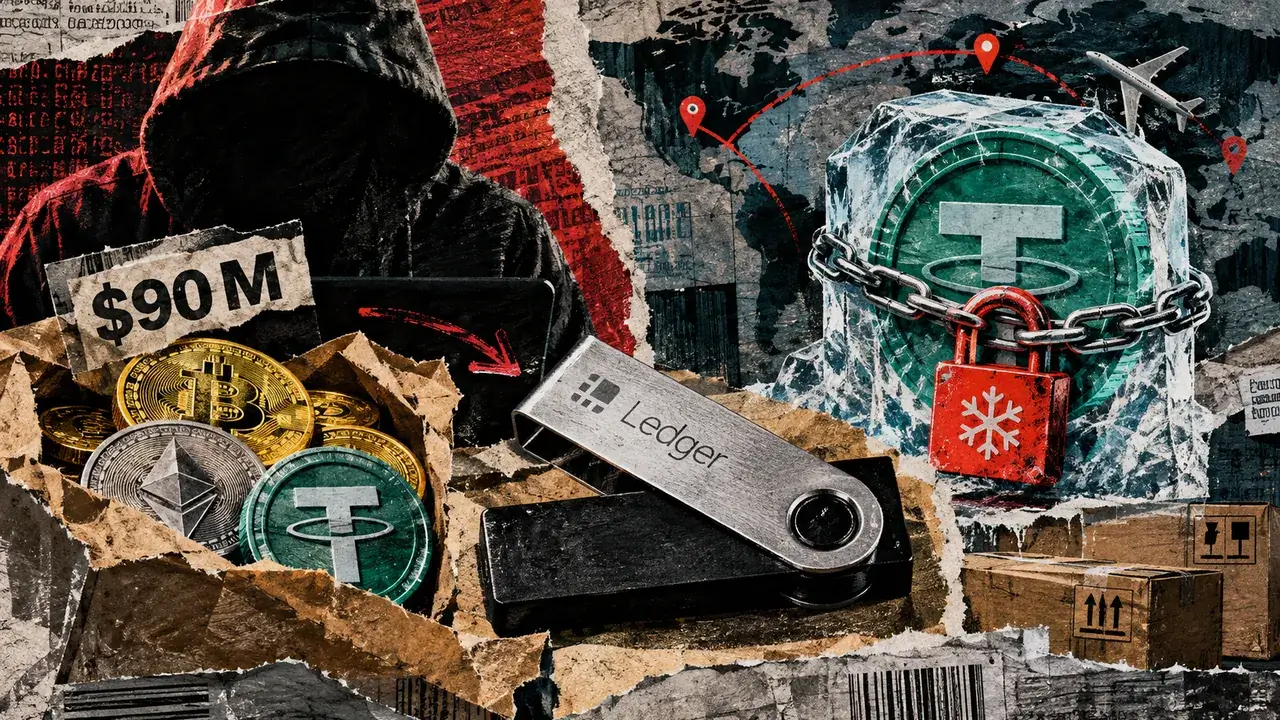
Ledger hack scare nears $90 million as Tether moves to freeze stolen USDT
Suspected Ledger wallet thefts are approaching $90 million as Tether freezes USDT stablecoin linked to the incident, according to...

Tether froze 1.45 million USDT in THORChain vaults, then reversed course three hours later
The incident highlights the vulnerability of DeFi protocols to centralized issuer actions, emphasizing the need for diversified as...
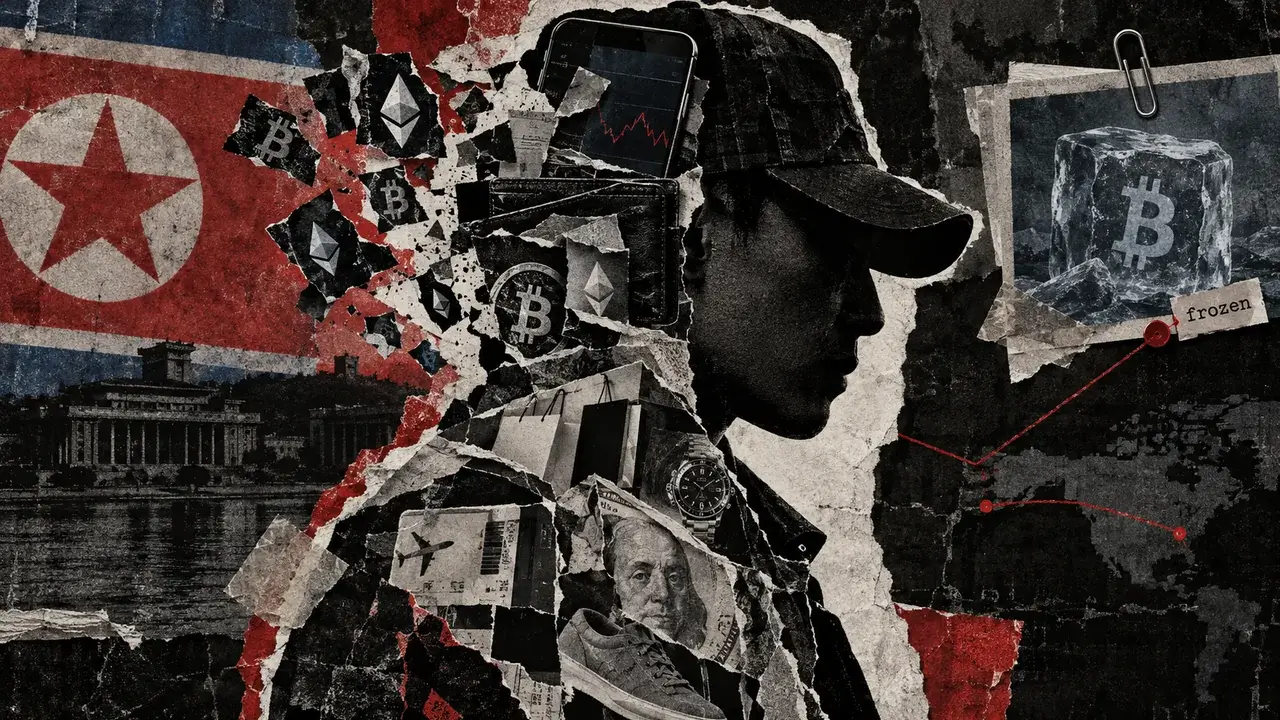
Stealing $1.5B in crypto is easy, cashing out is the trap
North Korean hackers stole around $1.5 billion from Bybit in February 2025. While the hack itself has been widely covered and anal...

Tether freezes $1.4M in TRON vaults and THORChain stalls
THORChain's TRON operations were interrupted on Oct. 9 after a USDT vault blocklist, according to reports by its co-founder Chad B...