StarkWare Quantum Bitcoin Transaction: First Quantum-Resistant BTC Transaction Hits Mainnet
StarkWare said researcher Avihu Levy tested an experimental quantum resistant Bitcoin transaction on mainnet. It is reported that the TX spent a 10,000-satoshi output in block 964,199 without altering Bitcoin’s consensus...
Archive context
Older archive item. Useful for background and entity history, but not a fresh market-moving signal.

StarkWare said researcher Avihu Levy tested an experimental quantum resistant Bitcoin transaction on mainnet. It is reported that the TX spent a 10,000-satoshi output in block 964,199 without altering Bitcoin’s consensus rules.
Bitcoin Completes First Quantum Resistant Transaction
StarkWare (@StarkWareLtd) says it has completed the first quantum resistant Bitcoin bitcoin:native transaction.
The method uses signature grinding to limit exposure while transactions wait in Bitcoin’s mempool. It repeatedly… pic.twitter.com/UJlsofzjq7
StarkWare described it as the first transaction of its kind. MARA Pool mined the block after receiving the transaction directly through its Slipstream service, since the nonstandard format meant ordinary nodes would not relay it through the public mempool.
StarkWare spokesperson Nathan Jeffay said the transaction cost around $150 to $200 in computation, and StarkWare said the process took hours. The demonstration shows a way to protect a single output under Bitcoin’s current rules, but at a material computational and operational cost.
Discover: The Best Crypto to Diversify Your Portfolio
How StarkWare Quantum Bitcoin Transaction WorksLevy’s Quantum-Safe Bitcoin (QSB) scheme, first proposed in April, combines hash-based one-time signatures with computational searches that bind authorization to a specific transaction. The construction is intended to prevent forgery even if a sufficiently capable quantum computer breaks the elliptic-curve cryptography used by Bitcoin.
In March, Google researchers estimated that a sufficiently capable quantum computer could theoretically derive a Bitcoin private key nine to 12 minutes after a public key becomes visible. Google said this could allow an attacker to replace a pending transaction during Bitcoin’s confirmation window.
Levy’s April proposal estimated that generating a transaction would require $75 to $150 in GPU computation; StarkWare put the cost of the completed transaction at around $150 to $200.
A Google Sycamore quantum processor inside its cryogenic cooling chamber.QSB applies to individual Bitcoin transactions rather than upgrading cryptography across the network. It allows coins to be moved into an output with additional protection without changing the Bitcoin protocol, but it does not protect coins whose public keys were exposed before migration. In that case, a potential attacker could have time to analyze those keys before a protected transaction is sent.
The transaction’s nonstandard classification under Bitcoin Core’s default relay policy is a practical constraint. Ordinary nodes do not propagate the transaction before confirmation, so it must be submitted directly to a cooperating miner through a service such as MARA’s Slipstream. The method, therefore, requires prepared transactions and direct miner access.
StarkWare CEO Eli Ben-Sasson said QSB provides a safety net while protocol-level protections are developed. The demonstration establishes a workaround under the existing rules, rather than changing Bitcoin’s underlying cryptography across the network.
Eli Ben-Sasson, co-founder of StarkWareTrade Bitcoin on Bybit and Get a Chance to Win Our $1,000 USDT Airdrop
The Protocol-Level AlternativeBitcoin developers are separately considering proposals, including BIP-360, a proposed soft fork that would introduce a Pay-to-Merkle-Root output type while removing Taproot’s quantum-vulnerable key-path spend. That approach would require network-wide coordination and activation.
Bitcoin (BTC)24h7d30d1yAll timeQSB does not wait for a protocol change. The mainnet test shows that Bitcoin’s existing consensus rules can accommodate one form of quantum-resistant spending, while broader protocol-level protections remain under consideration.
Discover: The Best Token Presales
The post StarkWare Quantum Bitcoin Transaction: First Quantum-Resistant BTC Transaction Hits Mainnet appeared first on Cryptonews.
Why this matters
Bitcoin is showing up inside the Security Incidents theme, so this story is worth tracking for follow-through rather than treating it as a one-off headline.
Original source
Read on CryptonewsRelated market context
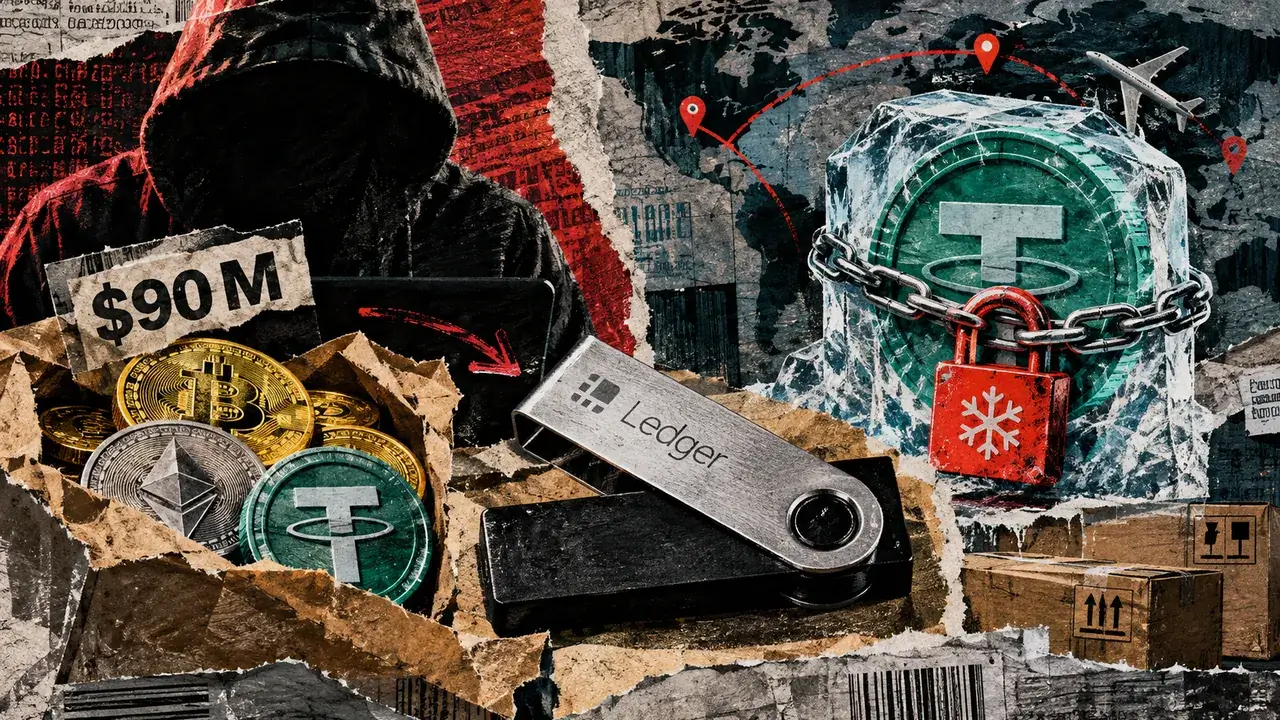
Ledger hack scare nears $90 million as Tether moves to freeze stolen USDT
Suspected Ledger wallet thefts are approaching $90 million as Tether freezes USDT stablecoin linked to the incident, according to...
Tether Freezes $1.45M in THORChain USDT Vaults, Then Reverses Blacklist Hours Later
Key Takeaways: The amount of about $1.45 million in USDT was temporarily frozen in THORChain vault addresses. According to THORCha...

AI Could Weaken Ethereum Security as Cryptographic Risks Grow, Vitalik Buterin Warns
Buterin urged developers to prepare for potential AI vulnerabilities in both conventional and quantum-resistant cryptography, whil...

Ledger theft-linked funds shift from USDT to USDD to dodge Tether freezes
The shift from USDT to USDD underscores vulnerabilities in stablecoin freeze mechanisms, prompting scrutiny on regulatory and secu...

Tether freezes USDT linked to Ledger user thefts near $90 million
The freeze highlights the need for robust supply chain security and raises concerns about the limitations of centralized control i...

Tether froze 1.45 million USDT in THORChain vaults, then reversed course three hours later
The incident highlights the vulnerability of DeFi protocols to centralized issuer actions, emphasizing the need for diversified as...