IREN’s Bitcoin Mining Revenue Falls as AI Cloud Sales Nearly Triple
TL;DR: IREN reported $200 million in quarterly AI Cloud revenue, up from $71 million the previous quarter, while Bitcoin mining revenue fell from $67 million to $28 million. Its November 5 results underline how quickly s...
Watchlist
Fresh in the current trading session. Multiple named entities are involved.
TL;DR: IREN reported $200 million in quarterly AI Cloud revenue, up from $71 million the previous quarter, while Bitcoin mining revenue fell from $67 million to $28 million. Its November 5 results underline how quickly some former mining-led businesses are shifting towards AI infrastructure — and how expensive that shift remains.
IREN’s latest quarterly results offer a particularly stark view of the transition taking place across publicly listed Bitcoin infrastructure companies. A November 5 filing with the SEC reports $200 million of AI Cloud revenue for the quarter ended September 30, 2026, compared with $71 million in the preceding quarter.
Bitcoin mining revenue, meanwhile, dropped to $28 million from $67 million. Total revenue rose to $228 million from $137 million, meaning the overall business expanded even as mining became a much smaller share of the total.
A different business is driving the growthThe company says AI Cloud revenue increased 182% sequentially and reported an 86% segment gross margin. That is a large change in a single quarter, supported by data-centre capacity coming online and customer contracts. But the term ‘gross margin’ is not a synonym for cash profit after financing, corporate expenses, depreciation and the capital needed to build the infrastructure.
IREN reported a net loss of $263 million for the September quarter, compared with a loss of $684 million in the preceding quarter. Adjusted EBITDA rose to $66 million from $19 million. The coexistence of strong revenue growth and a substantial accounting loss is precisely why neither metric should be read on its own.
The company said its revenue backlog increased to $20.3 billion, about two-thirds of it associated with investment-grade counterparties. A backlog is a contractual forward-looking figure subject to delivery schedules and contract terms; it is not cash already in the bank.
A timing change illustrates delivery riskManagement said a target of more than $4 billion in annual recurring revenue is fully contracted and funded, but its timetable moved from the end of 2026 to January 2027 following a customer-requested design change and supplier timing. It said completion could extend into February. The distinction between contracted and operating capacity matters especially when large AI computing clusters depend on specialist components and commissioning schedules.
IREN highlighted the Horizon 1 facility entering service for Microsoft and said it had signed additional contracts after quarter-end. Its filing also described planned remaining fiscal-year capital spending and the financing it expects to use. Investors should compare the timing of expenditure with when customer payments are due rather than assuming a huge order book removes funding risks.
The trend resembles the shift described in NewsBTC’s wider examination of Bitcoin miners and AI infrastructure. However, each operator has its own contracting arrangements, retained mining fleet, power infrastructure and financial obligations.
Does a mining decline mean the network is weaker?Not necessarily. IREN’s lower mining revenue tells us about one company’s business mix, not the aggregate computing power securing Bitcoin. Network difficulty, global hashrate and other miners’ decisions could move in different directions. NewsBTC’s reporting on hashrate competition is a useful counterpoint to the corporate story.
The next disclosures worth examining are realised AI revenue, actual data-centre commissioning, customer concentration, financing terms and remaining exposure to Bitcoin mining. IREN’s results show the transformation is already reflected in its income statement. Whether the economics produce durable shareholder returns depends on far more than the speed of this quarter’s revenue growth.
This article was written by the News Desk and edited by Samuel Rae.
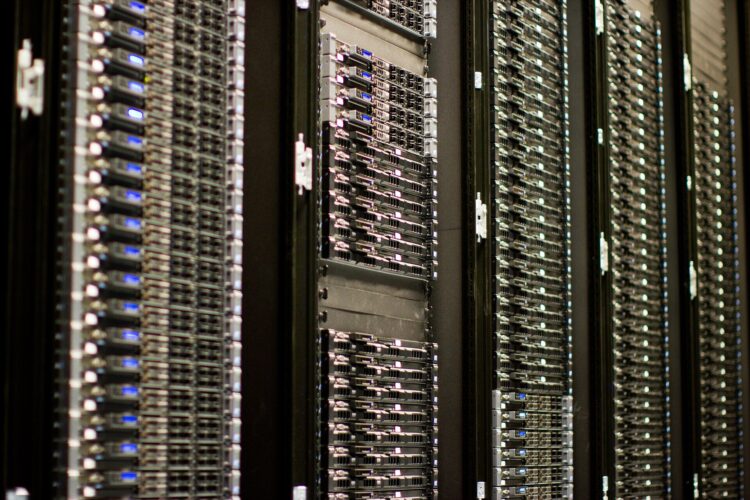
Featured image: Rows of server racks in a data centre (illustrative data-centre photograph only — does NOT depict an actual IREN, TeraWulf, or BitFuFu facility). Photo: Victor Grigas / Wikimedia Foundation via Wikimedia Commons, licensed under CC BY-SA 3.0.
Why this matters
Bitcoin is showing up inside the Mining theme, so this story is worth tracking for follow-through rather than treating it as a one-off headline.
Original source
Read on NewsBTCRelated market context
TeraWulf Says AI Leasing Now Generates 83% of Revenue as Bitcoin Mining Recedes
TL;DR: TeraWulf’s November 6 earnings release shows $63 million in third-quarter high-performance-computing lease revenue, around...
Terawulf and IREN Bet Big on AI as Bitcoin Mining Revenue Shrinks
Despite top-line growth, Terawulf’s operating loss widened to $88.2 million in Q3 while IREN saw bitcoin mining revenue fall 88% y...

TeraWulf posts $76.2 million Q3 revenue as AI leases outgrow Bitcoin mining
TeraWulf's shift towards AI leases over Bitcoin mining highlights a strategic pivot, potentially reshaping its future revenue stre...

Strive Reports $509M Quarterly Profit as Bitcoin Buying Accelerates
TL;DR: Strive reported $509 million in third-quarter GAAP net income and said it purchased 8,136 BTC during the quarter, followed...
BitFuFu’s October Bitcoin Mining Output Falls Despite Steady Hashrate
TL;DR: BitFuFu produced 137 BTC in October, down from 167 in September, while managed hashrate stayed close to 19.5 EH/s. The mine...
TeraWulf’s bitcoin mining revenue falls 69% as HPC leasing surges amid Anthropic buildout
TeraWulf reported $63 million in artificial intelligence-related quarterly HPC lease revenue, up 774% year over year.